
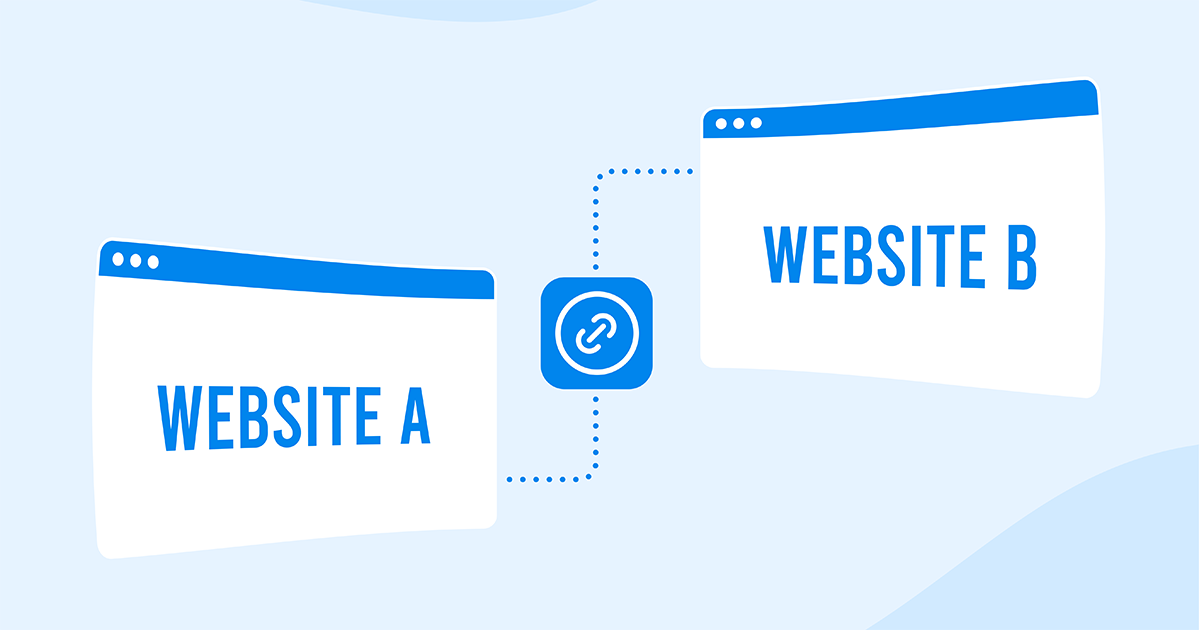
Fifteen years ago, the simplest indicator of a domain’s authority was the presence of a large number of links pointing to that domain. The logic is simple: if you have a decent website, people will link to it, generally to share with their followers or to cite it as a valuable resource. So, measuring backlinks is an indirect way to measure the quality of a site. In a perfect world, this would be okay. But this isn’t a perfect world.
In the world we currently live in, SEO experts make things complicated.
It can be difficult to verify whether a backlink was included because someone genuinely liked the content, because the website owner paid for it, or because it was placed without the full knowledge of the source website.
There are many different grey-hat and black-hat techniques through which the integrity of a link can be compromised, and that makes links much less significant overall. Links have been important for a long time and remain important today, although Google uses many other signals alongside them. The unfortunate outcome is a decrease in the value of any given link.
Do you understand why so many people still concentrate on .edu and .gov links? Because those domains are generally managed by educational and governmental institutions, which are much harder to incentivise to add links. However, the domain extension alone does not automatically make a link authoritative, relevant or valuable.
Implied Links
A while back, Google filed a particular patent titled “Ranking Search Results” that set the SEO world on speculative fire. Everyone was trying to guess when and where it would be implemented. Some commentators connected the patent with Panda, although Google has never confirmed that connection. This patent describes a method for identifying implied links through references to websites and brands.
The idea is, if I mention that I like Ahrefs.com but don’t link to their domain, there’s no way for Ahrefs to benefit from that—at least, there’s no measurable way. My comment might influence someone who reads this post, and that someone might later see Ahrefs and decide it’s a little more trustworthy than they initially suspected, but that’s hardly traceable. The patent describes how a search system could consider references associated with a website. However, the existence of a patent does not prove that Google currently uses this method in its live search rankings.
In simplified terms, a search engine could compare conventional backlinks with wider evidence that people recognise, mention or search for a brand. This should not be confused with Google increasing a public “domain authority” score, as domain authority is a third-party SEO metric.
For big sites like Ahrefs, the effect would be difficult to isolate. They’re already dominating their niche; they don’t really need the help. However, implied links could potentially work the other way as well. For example, Google might take a look at a site and see that it has a large number of incoming links from domains that, while not necessarily bad, are skirting the line of reasonable quality.
Google then does some investigation and finds that the linked site’s brand has virtually no mentions elsewhere on the Internet. No one is talking about it, let alone in a positive light. Even the websites linking to it are just linking, not mentioning it. Google could theoretically look at that evidence and decide that the links pointing to the website aren’t necessarily all that valuable.
Essentially, implied links could work as a quality-control mechanism for actual links, helping to filter out black-hat and grey-hat tactics. This could become increasingly important as Google gets better at understanding the semantic meaning behind a post, evaluating the quality of information on a site and filtering out spam techniques through its algorithm.
Taking Advantage of Implied Links
With any developing area of SEO, it is useful to understand the idea before deciding how much attention to give it. As I said before, implied links are mentions of your brand name or website that are not connected to a link. Think of them as branded keywords that, when used on other sites, may help reinforce your wider online presence.
The biggest downside of implied links is that there’s almost no way to track their effect. It’s hard, but not impossible, to monitor your brand mentions throughout the entire web, and it’s hard to measure their actual impact on your website. You can use social-listening tools such as Mention or Hootsuite to track where and how often your brand is mentioned online.
Additionally, set up Google Alerts to receive notifications whenever your brand is referenced.
And of course, whatever you are doing, for the time being don’t ditch traditional link building.
Google’s own guide to its ranking systems confirms that link-analysis systems and PageRank remain part of its core ranking systems. Legitimate backlinks, especially earned backlinks, are still valuable. As long as the source of the link is a quality website, the link will very likely benefit you. A nofollow link may not provide the same SEO value as a standard editorial link, but it can still generate referral traffic, visibility and brand awareness. The link also needs to connect relevant content with other relevant content.
Work on strengthening your online reputation and E-E-A-T. Google explains that E-E-A-T itself is not one specific ranking factor, but its systems use a mixture of signals to identify content that demonstrates experience, expertise, authoritativeness and trustworthiness. Do this with an emphasis on your brand name. Try to get people to refer to you by your brand name when they mention you. When you post on other sites, use your brand name, even without a link, in author bios and similar fields.
Create content for your users, not for search engines. This also aligns with Google’s guidance on creating helpful, reliable, people-first content. The more people like you and your brand, the more they will talk about you. Essentially, building implied links is just like building word of mouth. You’ll gain benefits when people talk about your brand, even if they don’t link to your website.
Don’t stress out over nofollow links. Although Google treats them differently from standard links, they can still generate traffic and brand awareness. Google has not confirmed that nofollow links pass anything called “implied link equity”. Its outbound-link guidance instead explains when nofollow, sponsored and ugc attributes should be used.
For now, there’s no way to tell exactly how much SEO value an individual mention provides. It’s also possible that the value of mentions may change over time as Google adjusts its systems. The patent shows that Google has explored ways to evaluate references and brand-related searches, but it does not prove that every unlinked mention is currently used as an authority signal. What’s not certain is how effective implied links are, how they will change in 2027 and how you can best take advantage of them.
For that reason, implied links are best treated as part of a wider brand entity SEO strategy rather than as a guaranteed ranking factor.
