

SEO is not about a never-ending war with Google algorithms and competitors. It’s about delivering value to people interested in your content. Period.
In this blog post, we provide an actionable set of SEO tips for beginners showing you how to do exactly that.
Practise them consistently, and you can improve your search visibility, attract the right visitors and start competing for valuable keywords.
SEO can be intimidating. There are hundreds of potential improvements you could make, and somebody will always be ready to tell you that you have missed another one.
However, as a beginner to SEO, it is usually quite easy to identify and improve the basics. Let us help you get those right.
If you are launching a new business, our SEO for startups plan puts these fundamentals into a broader launch strategy.
Let’s Dive In
In this guide:
- Mobile First
- User Experience
- Information Architecture
- Pick Keywords for Every Page
- Keyword Research and Targeting
- How to Find Which Keywords You Rank For
- SEO Titles and Meta Descriptions
- Keywords in Headings and Paragraphs
- Write Fresh Content for Humans
- Write Longer Content
- Internal Linking
- External Linking
- How Links Help Google Rank Pages
- Local SEO
- Tracking and Measuring SEO
- Reputation and Brand Management
Mobile First
Among the first SEO hints and tips we provide, we ask beginners to optimise for mobile.
Mobile devices now account for a large proportion of web traffic, so your website needs to work just as well on a phone as it does on a desktop computer.
If you own a local business, you are missing out by not optimising your local landing pages.
Think about how often people use their phones to search for a nearby restaurant, shop, plumber or professional service. If your page is difficult to read, slow to load or awkward to navigate, they are unlikely to hang around.
So, how many potential customers could you be losing through a poor mobile experience?
Optimising your SEO for mobile means making sure that the content that appears on your desktop website also appears on its mobile version. Important text, images, headings and links should not disappear simply because somebody is using a smaller screen.
Read also: Technical SEO Checklist
Google primarily uses the mobile version of your website when crawling and indexing its content, so mobile should never be treated as an optional extra.
Responsive web design allows the layout of your website to adapt to different screen sizes while keeping the same core content available across mobile and desktop devices.
Most templates in WordPress and Wix are built using responsive design. Using a modern content management system can therefore make mobile optimisation easier, although you should still test every important page yourself.
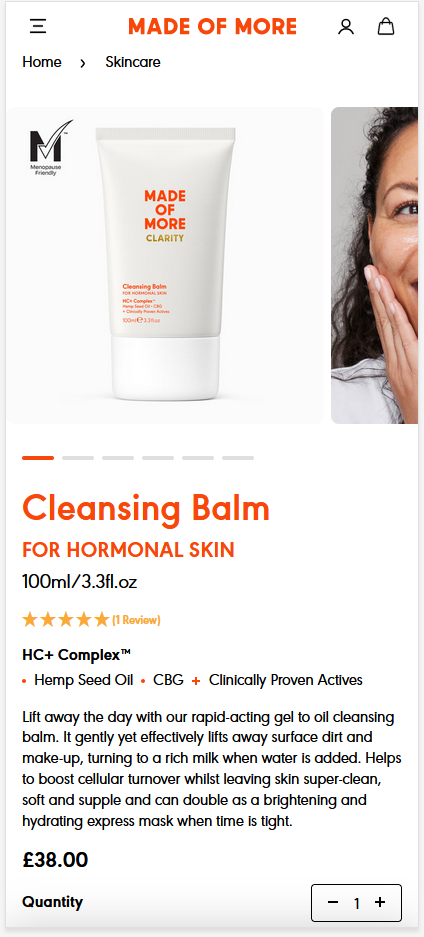
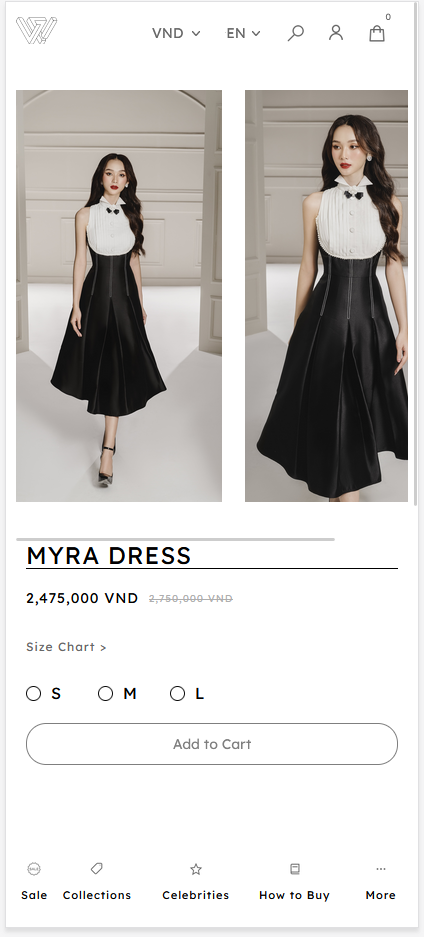
Some eCommerce websites that merge SEO and UX to provide a strong mobile experience:


Read also: UX/UI Design in Digital Marketing
You can also create content around local search terms and actively update your Google Business Profile with reviews, new photos, posts and accurate business information. This can support your local visibility, although your rankings will also depend on factors such as relevance, location and the prominence of your business.
Read also: Beginners Guide to Local SEO
Actionable tips for mobile:
- Write clear SEO titles and meta descriptions, placing the most useful information near the beginning. Google may shorten them depending on the device and search query.
- Create useful local pages when you genuinely serve those areas. For example, an Indian restaurant in London might create content around its location, menu and nearby delivery area rather than simply repeating “Indian London” throughout the page.
- Do not add words such as “best” simply because people search for them. Show why your business is a strong choice through useful content, reviews, experience and evidence.
- Use responsive web design for content to remain consistent across all device platforms. A CMS such as WordPress can help, but it does not replace proper testing.
- Make sure buttons are easy to tap, text is readable and forms work properly on mobile.
- Compress large images and remove scripts or plugins that make the page unnecessarily slow.
User Experience
If you consider Google’s objective, using user experience as your key SEO guiding principle makes complete sense. That’s because Google wants to deliver the very best experience for its customers.
In other words, this means providing its users with the most relevant search results that satisfy their search intent.
Therefore, always think to yourself:
“If I search for a particular term, what would be the ultimate result for me?”
For example, if I search for a phrase such as “Best Laptops under £1,000”, what kind of page am I hoping to find?
Read more: Poorly Designed Websites Impact Rankings: Here’s Why
Probably one that has the following:
- A list of laptops from brands I know under £1,000
- Reviews and explanations of each laptop
- High-quality content and expert advice
- Images of each laptop correctly labelled
- A fast page-load speed
- Text that is easy to read
- Content written in my own language
- A video review of the chosen laptops
- An easy-to-navigate page broken down into appropriate headings
- Clear information about who each laptop is suitable for
- Current specifications and prices
- An honest explanation of the advantages and disadvantages of each option
Funnily enough, these criteria, along with many others relating to user experience, are also qualities commonly found on useful, high-performing pages.
After all, if a Google searcher consistently finds results that do not satisfy their search intent, they will probably end up trying another result or search engine. Google absolutely doesn’t want that.
So, what’s your reward for optimising your webpage better than anybody else?
More visibility, more relevant visitors and, with a little patience, a chance of appearing near the top of the search results.
Information Architecture
Information architecture, or IA, refers to designing and structuring your content to make it useful and easy to understand for both readers and search engines.
Good IA is clear and easy to scan for users and makes it easier for search engines to understand your content.
Some recommendations for good architecture include:
- Ensuring each page has a specific focus
- Using clear introductory copy so visitors immediately understand what the page is about
- Having clear and descriptive page titles
- Breaking up text with subheadings for easy viewing and good structure
- Showing relationships between pages through internal linking and breadcrumb navigation
- Organising similar products, services or articles into logical categories
- Making sure important pages can be reached through your main navigation or internal links
- Avoiding keyword cannibalisation by creating several pages that all target exactly the same topic without offering anything different
Pick a Topic and Keywords for Every Page
Google tries to understand search intent and match it with useful content in its index.
So how can you help Google do that?
You will have to create content that satisfies the user’s problem or answers the question that led them to search.
If your page provides the information they need clearly and convincingly, it has a much better chance of performing well. That does not guarantee the number-one position, but it certainly puts you on the right track.
But is that enough?
For every web page you create, make sure you select one particular topic and then look for relevant keywords and questions connected with it.
Suppose you are writing a blog post on “how to clean leather bags”.
For a start, you could look at Google’s search results. Analyse recurring topics. “Tips for cleaning a leather bag”, “simple steps to clean your leather bag” and “products to avoid when cleaning leather” are some possible inspirations.
The idea is not to copy the current results. It is to understand what people want to know and then create something clearer, more useful or more detailed.
Read also: Blog SEO for Beginners
A few places you can look for more keywords are:
- Google autocomplete
- Google Keyword Planner
- Google’s search results
- Google Trends
- Google Search Console
- People Also Ask
- Questions asked by your existing customers
- Your competitors’ category, service and blog pages
Keyword Research and Targeting
A keyword refers to the term or phrase a person enters in the search box when looking for specific information.
Keywords are essential to search engine optimisation because they can be used to tell search engines that your content is relevant to particular searches, effectively saying:
“Hey Google, when someone searches for these terms, my content can provide relevant information!”
Keyword research, then, is the process of discovering the right keywords to target in your SEO marketing campaign.
Keyword research can be done using a variety of methods:
- Using Google keyword tools, such as Google Keyword Planner
- Analysing data from Google Trends
- Researching the sites of your competition
- Paying attention to feedback from your customers and prospects
- Adding a search box to your site to discover what people want to know
- Surveying customers to discover how they learned about your business and why they chose you
- Reviewing the actual searches already generating impressions in Google Search Console
- Looking at which questions regularly appear during enquiries and sales conversations
For example, if you run an electric scooter online shop, you want to make sure that your site shows up when people search for “electric scooter”, but even more importantly, you should identify more specific searches connected with the products you sell.
Long-tail keywords are specific variations of your core keyword.
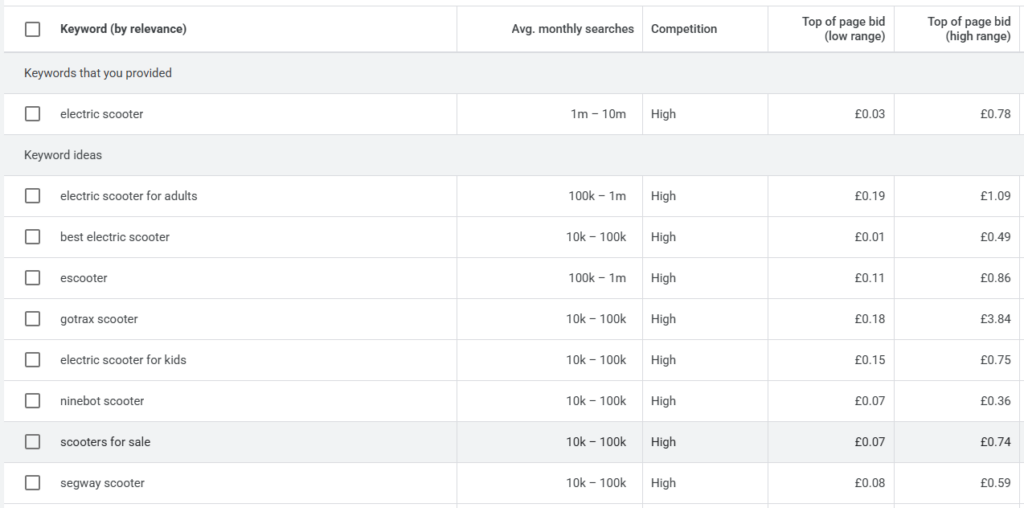
Other examples might include “lightweight electric scooter for commuting” or “folding electric scooter for adults”. These searches may receive less traffic individually, but the person searching often has a much clearer idea of what they want.
Once you have done the research and identified the keywords your customers are searching for, you then use these throughout your content.
Do this naturally. Do not treat keywords like ingredients that must be sprinkled into every paragraph. Use the main phrase where it makes sense, then include related words and questions that help you cover the topic properly.
How Can I Find Out What Keywords I’m Ranking For?
Three words.
Google Search Console.
Google Search Console is a free tool provided by your favourite global mega-company.
If you’re at all serious about performing good SEO, you need to set this up for your website.
Google Search Console, or GSC, allows you to see which search queries generate impressions and clicks for your pages. It also reports an average position, although rankings can vary between users, locations and devices.
This lets you tailor your page content to more effectively cater for a user’s search intent.
Say, for instance, you have a skincare website and a page that ranks for “face wash” at position 16 in the UK.
However, the page is titled “Skincare” and the phrase “face wash” only appears three or four times. What’s more, you have several products that are not face wash.
You head back to GSC and check what other terms this page ranks for. It looks like many of the strongest terms are related to face wash and not skincare.
But what now?
First, check whether you already have a dedicated face-wash page. If you do, it may simply need better content and stronger internal links. If you do not, creating a clear face-wash category may make more sense than transforming your entire skincare page.
Search Console data gives you clues, but you still need to consider the purpose of the page and the wider structure of your website.
Should You Change the URL?
As a rule, avoid changing a URL that is already performing well unless there is a clear reason to do so.
Changing a URL does not cause an automatic Google penalty, but it can create temporary disruption if it is handled badly.
When a change is necessary, redirect the old URL permanently to the most relevant new page. You should also update your internal links, canonical tags and XML sitemap.
In other words: do not change URLs casually, but do not be terrified of changing one when there is a genuine structural reason. Just do it properly.
Optimise SEO Titles and Meta Descriptions
SEO titles and meta descriptions are some quick, actionable wins amongst the SEO tips for beginners.
Once your website is indexed on Google, search results may display your page title and a short description of what the page is about.
SEO titles and meta descriptions serve three purposes:
- For users: They make a promise that the page is about the topic shown in the title
- For businesses: They act as conversion opportunities
- For search engines: The title helps explain the page’s main subject
In the background, it looks something like this:

What people see in search results:
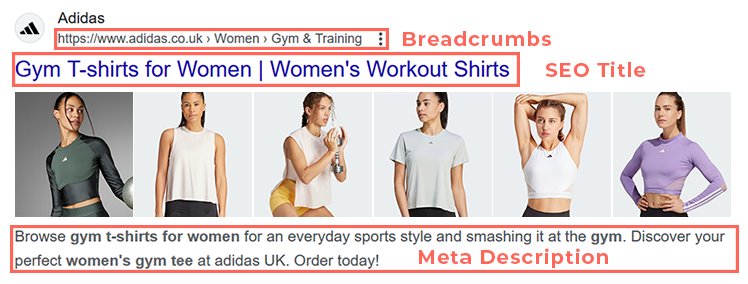
As a beginner to SEO, titles and meta descriptions are relatively easy tactics to implement.
Read more: Meta Tags: The Essentials
Two things you have to keep in mind are:
- Include the main topic naturally in the title
- Write your meta description in a persuasive manner to draw the reader into your article
- Explain the benefit of visiting the page
- Make sure the description accurately reflects what the visitor will find
- Give important pages unique titles and descriptions
Pro tip: Google does not apply one fixed character limit to every search result. Titles and descriptions may be shortened depending on their width, the device and the query. Keep them concise and put the important information first.
Do NOT over-optimise titles and meta descriptions with keywords. Write naturally.
Use Keywords in Headings and Paragraphs
Another easily implementable SEO tip for beginners is using keywords in headings and paragraphs.

Similar to titles, headings also promise your reader that the following section will focus on a particular topic.
And similar to titles, write naturally and don’t force keywords.
Headings on a webpage are usually marked as <h1>, <h2>, <h3> and so on, while paragraphs are marked as <p>.
Use SEO keywords in your subheadings and within paragraphs when they fit naturally. You do not need to repeat the exact same keyword in every heading.
One advantage of using SEO keywords is that you build an image of speaking your customer’s language.
Every search query is your customer’s mind voice. As troubles brew within, they are replicated as search queries on Google.
Using these very search queries will help you resonate with your reader and build empathy.
Clear headings and direct answers may also increase your chances of appearing in featured snippets and other enhanced search results. There is no magic format that guarantees this, but making the answer easy to find certainly helps.
Actionable SEO tips for beginners:
- Insert questions in your subheadings and their answers in paragraphs
- Look at the People Also Ask section and answer the relevant questions
- Use one clear main heading for the page
- Follow it with logical subheadings rather than choosing heading levels purely for their visual appearance
- Avoid headings so vague that readers cannot tell what the section contains
Write Fresh Content for Humans, Not Search Engines
At a high level, SEO may mean that you optimise your website and content according to the rules used by the crawl bots patrolling the web.
However, expert or beginner, friend or foe, here is my suggestion for you:
Optimise your website for humans.
What does writing for search engines mean?
It means that you are stuffing keywords and writing in an unnatural manner, aiming to manipulate crawl bots.
Let me tell you this.
Google takes into account much more than keywords when ranking content.
Read more: Google’s Helpful Content Update: Why It Remains Relevant in 2026
Do not obsess over bounce rate or average time on page as if they directly decide your Google ranking. They can be useful analytics measurements, but they need context.
Somebody might visit your page, find the answer in 30 seconds and leave perfectly happy. Somebody else might keep the tab open for 20 minutes without reading a word.
What matters is whether your content actually helps the person who landed on it.
Read also: Content Writing Tips for Beginners
If users desert your website after finding content stuffed with keywords and no solution to their problems, you have a content problem, whether or not an analytics report labels it a poor engagement session.
Secondly, write up-to-date content.
Fresh content is sometimes recognised as an advanced tactic. But it is not. It’s time we move it into the list of SEO tips for beginners.
Now, there are three meanings to this.
One is that fresh content is accurate and current when the subject requires it.
An article about legislation, statistics, software or industry trends may need regular updates. A timeless guide may not. Do not update a page simply to change the date at the top. Make the update worthwhile.
It also means that the content can remain useful for a long time. Content types such as how-to posts, DIY posts, actionable tips and resource pages can continue attracting visitors when they answer recurring questions well.
Thirdly, you can improve your older posts by updating them with newer content on the same page.
Often this results in longer posts.
Well, why not?
Just make sure the new material improves the article rather than padding it out.
Write Longer Content — When the Topic Needs It
Writing longer content can bring several benefits, such as:
- Bringing in backlinks when the article offers something worth referencing
- Covering more related questions
- Opportunities to rank for multiple relevant keywords
- Building brand authority
- Giving readers enough detail to understand a complicated topic
Long-form content has existed for ages. Speeches, interviews, radio talk shows and movie reviews are some examples.
One of the most suggested SEO tips for beginners is to encourage them to write long-form content.
Writing is tedious.
Unless you find writing for SEO interesting like I do.
But longer does not always mean better. Google does not require every article to contain 1,000 words, and a page does not become authoritative simply because it is long.
If you can answer the question properly in 600 words, do not drag it out to 2,000 because somebody told you that longer articles always rank better.
On the other hand, do not squeeze a complicated topic into 300 words and leave half of the reader’s questions unanswered. Write as much as the subject genuinely needs. Then stop.
Actionable SEO tips for beginners:
- Writing becomes easier if you find the right topics, headings and questions to answer. Do your keyword research first and then select what topics to write about.
- You can also record yourself talking about a topic, transcribe it and proofread it into the format of a blog post.
- You can hire a freelancer or a digital marketing agency to write the content for you while you do the keyword research.
- Use real examples, personal experience and original observations where possible. These are often more valuable than another five paragraphs repeating what every other website has already said.
- Edit ruthlessly. Longer content still needs to earn its length.
Pro tip: While long-form content can be good, always try to fulfil the search intent for the keyword. If short text and more images do the trick, then that’s good enough.
Internal Linking — Be a Little Selfish
Internal linking is one of the most underappreciated and under-exploited strategies in SEO.
Internal linking does several useful things:
- It provides a structure to your website
- For readers, it helps them move on to more relevant topics within your site
- It helps search engines discover your pages
- It shows relationships between products, services, categories and articles
- It can help important pages receive more attention from elsewhere on your website
Internal linking is an important SEO fundamental, but adding one link will not magically secure a top-10 position. Use it as part of a clear and useful website structure.
Actionable SEO tips for beginners:
- Use relevant and descriptive wording as anchor text when you do internal linking
- Link to relevant web pages
- Avoid vague anchor text such as “click here” when a more descriptive phrase would be clearer
- Do not overdo it
- Do not worry about maintaining a particular internal-to-external-link ratio. Add links where they help the reader
- Check for broken internal links
- Link to important new pages from older, relevant pages
- Make sure valuable pages are not left isolated with no internal links pointing towards them
External Linking — Be More Magnanimous
External links are also important when they support your content. Many SEO amateurs fail at linking to other sites.
Google wants users to have a convenient user experience wherever they go on the web.
By linking to a useful source, you can support a claim, show where information came from or help the reader explore a subject in more detail.
Hence, it is important to link to credible, trustworthy informational sources that improve the reader’s understanding.
Read more: SEO and Link Building: Your Guide for 2026
It also builds your brand authority by creating an impression of you being the go-to source for all things credible.
Actionable SEO tips for beginners:
- Link to sources because they are accurate and relevant, not simply because an SEO tool gives the domain a high authority score
- Whenever possible, link to the original source of a statistic, announcement or piece of research
- You can use Google search tools to set recent periods to find newer sources
- Use search operators such as filetype:pdf and site:.org to find useful documents and sources
- Check the publication date and make sure the information is still current
- Periodically review older articles for broken external links
Pro tip: Avoid linking to a spammy site. Both users and search engines may lose trust in your content if you repeatedly send them to unreliable sources.
Do not be frightened by the number of external links alone. A well-researched article may naturally include several references. The problem begins when the links are irrelevant, excessive or added purely for manipulation.
Not All Links Are Created Equal
There are two items to touch on in this section: link quality and link attributes such as sponsored, UGC and nofollow.
First up, what do we mean by link authority?
Well, it’s self-explanatory really.
If you receive a link from an established and trustworthy source, such as a respected newspaper, university, trade organisation or recognised industry publication, it may carry more weight and send more valuable referral traffic than a link from a spammy directory site.
You can use third-party tools such as Moz, Ahrefs or Semrush to compare websites and investigate their backlink profiles.
Just remember that metrics such as Domain Authority are created by SEO software companies. They are not Google scores.
Low-authority backlinks can still be useful to have, especially when the website is relevant to your industry, location or target audience. A link from a small local business association may be more useful to you than an unrelated link from a much larger website.
So we’ve covered link authority. What about dofollow and nofollow links?
A standard link does not actually need a “dofollow” attribute. SEO professionals commonly use “dofollow” to describe an ordinary link that has not been marked with another relationship attribute.
Google supports several link attributes:
- rel=”sponsored” for paid, affiliate or sponsored links
- rel=”ugc” for user-generated content such as comments and forum posts
- rel=”nofollow” when you do not want to associate your website with the destination or when the other attributes are not suitable
Do not dismiss a link just because it is nofollow. If it sends the right people to your website, gets your brand noticed or leads to future opportunities, it can still be a very good link.
And if you are asking another website owner for a backlink, do not insist that it must be “dofollow”. Focus on earning a legitimate, relevant link rather than trying to dictate how the publisher marks it.
How Links Help Google Understand Relevant Pages
Consider the fact that Google has crawled an enormous number of pages across the web.
That’s a lot of pages. Certainly more than a human could manage to get through.
That’s why Google and other search engines use bots to do this heavy lifting.
But bots still need clear signals and context. Hyperlinks provide search engines with an indication of what the linked page is about, particularly when useful anchor text is used.
If I link to our blog on digital marketing mistakes, that wording gives both the reader and the search engine a reasonable idea of what they will find.
If, however, I link to the page by saying “check out our awesome blog by clicking here”, the wording is much less descriptive.
The actual word or phrase we link, in this case “digital marketing mistakes” or “here”, is known as anchor text.
Make your anchor text descriptive, natural and relevant to the destination. It does not need to be the exact target keyword every time.
Repeating the same exact-match keyword across every link can sound unnatural. Sometimes a page title, brand name or slightly different phrase will be better for the reader.
Local SEO
If you are going in the other direction and aiming for a more localised strategy, then you need to understand the concept of local search and, by association, local SEO.
People with high purchase intent often search for service providers in their immediate vicinity.
For example:
“Best service near me.”
Google will provide search results specifically based on their location, so if you want to become the go-to service provider in your local community, it is important that you build strong local visibility.
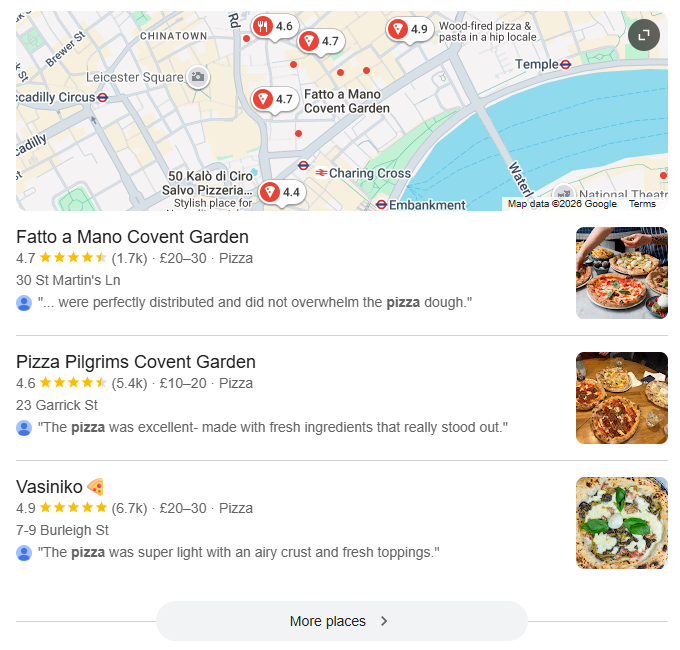
Google generally describes local rankings through three broad factors: relevance, distance and prominence.
- Relevance: How closely your business matches what the person is searching for
- Distance: How close your business is to the location connected with the search
- Prominence: How established and well known the business appears to be
The most important steps you can take to maximise your visibility in local searches include:
- Set up and properly optimise your Google Business Profile
- Fill in as many relevant details as possible and make sure they remain up to date
- Choose accurate business categories
- Citation building
- Keep your business name, address and telephone details consistent across important listings
- Reviews: Manage and monitor your reviews to provide potential customers with a vote of confidence and increase word-of-mouth recommendations
- Display reviews on your website to build trust with visitors
- Encourage genuine Google reviews without offering rewards or pressuring customers
- Link building: Earn relevant links and mentions from local organisations, suppliers, trade associations, charities and news websites
- Create useful service-area pages only where you genuinely operate and can provide unique local information
- Avoid producing dozens of near-identical town pages with only the place name changed
Reviews displayed on your website can improve trust and conversions. Google reviews and your wider online prominence can also support local visibility, but reviews alone will not guarantee higher rankings.
You can discover more about how to optimise your website for local SEO and global SEO in our in-depth guides on the subject.
Tracking and Measuring
Tracking and measuring your SEO efforts is a huge part of ensuring your success.
By analysing what you are doing, you can make sure that your efforts are driving results.
Use Google Analytics alongside Google Search Console to make sure that your strategy stays on track and generates business success and a healthy return on investment.
If you are new to the world of analytics, read Web Analytics Basics: Understanding Google Analytics.
Google Search Console can show you search impressions, clicks, queries, pages and indexing issues. Google Analytics can help you understand what people do after arriving on your website.
The measurements that matter will depend on your business, but they may include:
- Organic clicks
- Qualified enquiries
- Phone calls
- Contact-form submissions
- Sales and revenue
- Newsletter registrations
- Bookings
- Visibility for relevant non-branded searches
Do not celebrate traffic for the sake of traffic. Ten relevant visitors who enquire about your service may be more valuable than 1,000 people who arrived for the wrong reason.
Read more: Digital Marketing KPIs and Metrics
Reputation and Brand Management
Building a strong brand and online presence can go a long way towards helping your search visibility.
When you Google “running shoes”, Nike is one of the first results after the paid ads.
Large brands often have well-established websites, extensive press coverage, thousands of mentions, strong backlink profiles and huge numbers of people searching for them by name.
What brand do you think of when you think of running shoes?
Most likely Nike, Adidas or Asics.
If you look at the search results for running shoes, you have paid search ads, local search results and then the organic results, which include the biggest shoe brands and the most popular running-shoe retailers.
Read more: Brand Entity SEO: The What, Why and How
Building a strong reputation among your target audience will elevate your brand, and as you become more popular, you may attract more searches, links, mentions and customers.
However, this often makes it difficult for smaller businesses to compete.
So how do you take on these big brands?
The trick is…
You don’t.
A smarter strategy is to focus on ranking for more specific keywords.
For example, if you offer a customisation service for running-shoe orthotics, then let Nike have “running shoes” and instead focus on ranking for your niche offering as a search term.
You do not need to be the biggest company on the internet. You need to be one of the most useful and convincing options for the particular audience you want to reach.
If your website has just gone live, our new website checklist will help you choose your next steps.
Conclusion
As a beginner, these SEO tips can help you take off and start improving your visibility in Google’s search results.
You do not need to fix everything at once. Begin with the fundamentals: understand what your customers search for, create useful pages, improve your titles and headings, make the website easy to use on mobile and connect related content with sensible internal links.
Then measure what happens, learn from the results and keep improving.
We would be glad to hear which of these tips you found most useful and which parts of SEO you would like us to explain next.
Feel free to check out our SEO Services or just drop us a message!
