
The way search engines operate has undergone significant changes over the last decade, and even over the last handful of years.
Think you know how search engines work?
You might need to think again.
Though search engines are constantly evolving and adapting to remain relevant and provide accurate results for users, there are several processes they follow that can help us understand the science behind search engines.
And, crucially, understanding this process can be the difference for website owners and developers between a visible site and a site that disappears into the abyss of the internet.
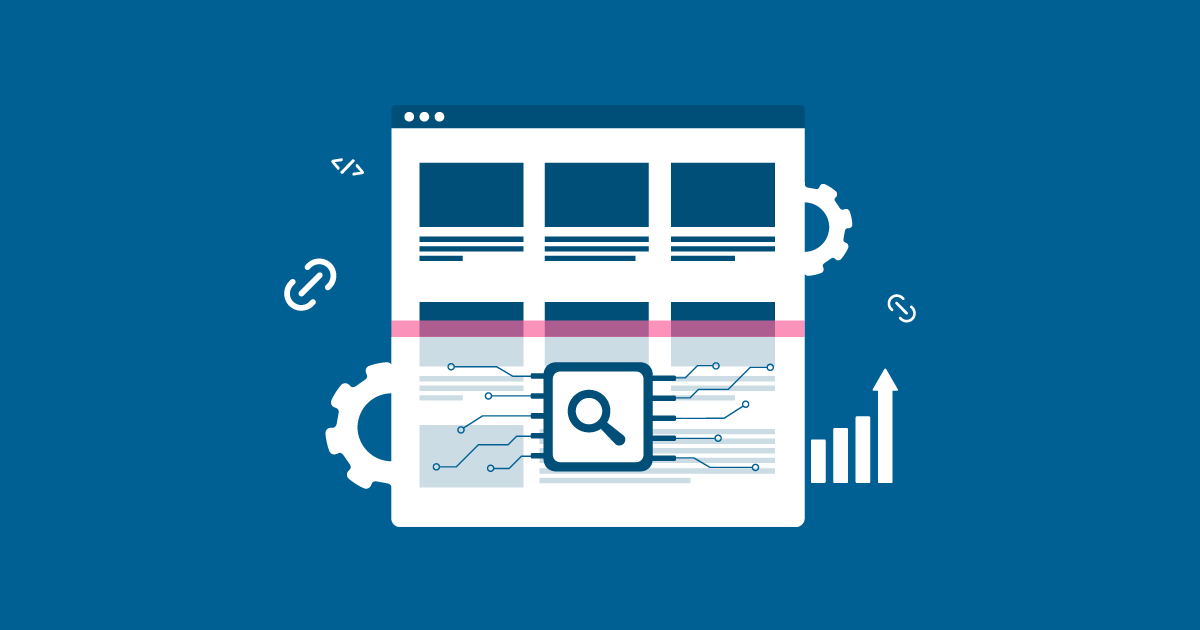
In a nutshell, search engines work by crawling, indexing, ranking and serving results, processing search queries, and, increasingly, using AI-assisted systems to summarise and organise information, all with the aim of providing the user performing the search with the most relevant and high-quality results. Google commonly describes Search as moving through crawling, indexing and serving results, but in practice there are many systems working together behind the scenes. Source
Now, let’s delve a little deeper into the mysterious mind of a search engine.
Crawling: Lots of Bots
The worker ants of the search engine world are known as bots or spiders, and their purpose is to continually crawl the vast expanse of the internet, creating an index as they go.
Translated: Bots are discovering pages and following links so search engines can understand what exists online.
For Google, the crawler software is affectionately known as Googlebot.
Googlebot works tirelessly day and night, much like Santa and his elves throughout the month of December, to find new and updated web pages, and add them to its existing database.
However, not all sites that get crawled will be indexed. Google states that it does not guarantee every page will be crawled, indexed or served, even when a site follows its guidance.
This is one of the key reasons why having an understanding of how Google search works will impact how successful and visible your website is.
For example, if the crawlers and indexing systems determine that a webpage features duplicate information, has low-quality content, or minimal content, then it may not index the page, making it significantly more difficult to get found in a search.
How Does Googlebot Discover New Pages?
It’s not as difficult as it might seem at first glance, as modern platforms such as WordPress or Shopify will do one very important thing for you – create a sitemap. Your job is to submit this sitemap to Google Search Console.
Think of the sitemap as the roadway of your website. You might not appreciate its layout, but bots will, as it provides them with a list of pages you’d like to have indexed plus some important information about those pages – when they were last modified, and what the main image associated with each page is.
Now your job is done because you just submitted a sitemap and that’s where Google can see all your pages? Well… not really.
You still need to sort out:
- Internal links
- External backlinks
Internal links are important because they show Google that the page you wish to be indexed is linked from, for example:
- The main menu
- The homepage (e.g. a services section with links to each service)
- The footer
- Internal “read more” style links within your blog
The reason Googlebot likes to see these internal links is that they help it understand the importance a website owner wants to give to a particular page. If you have a /test/ page (yes, it happens more than you might think) accidentally published and included in your sitemap, but it isn’t linked from anywhere on your site, Google would most likely ignore it.
Quality external backlinks to your pages can help get those pages indexed more quickly, as links are essentially votes of confidence for your website. So if you receive a link from, say, the Belfast Telegraph, Google will find that article, follow the link, and speed up the process of deciding whether your page deserves to be indexed.
Inside Indexing
Once the crawlers have identified a new or updated page, they may index it.
A newly indexed addition will include the web page URL, along with essential information that will help the search engine determine if this page is relevant to future searches. This will include keywords that have been found on the page, to decipher what topic the page is predominantly about.
It’s worth noting that search engines don’t just index the words on a page – they also analyse the relationships between concepts, meaning a page about ‘running shoes’ may also be considered relevant for searches like ‘best trainers for marathons’ even without those exact words appearing on the page.
Our entity SEO guide explores this idea further, looking at how people, places and organisations connect within search.
The index entry will also note what type of content was included on the page, and how recently it was updated.
Finally, the index entry will include information about user engagement; notably, how people have interacted with the page.
Search engine indexes are constantly being updated to reflect changes made to any given website or webpage, ensuring that search results continue to remain current.
Why Would Google Crawl a Page But Not Index It?
As of May 2026, a shift was reported by prominent SEO figures (including Barry Schwartz) suggesting that Google may be de-indexing pages at a higher rate than usual. It’s worth noting there has been no official confirmation from Google on this, so treat it as an observed trend rather than confirmed policy. What is clear, however, is that if your content is:
- Thin – it offers no real usefulness to the end user, no genuine opinions, no in-depth research, nothing that AI can’t already provide
- Duplicate – copied from another website
- Technically flawed – for example, multiple versions of the same page exist on your site without a canonical tag telling Google which one is the correct version
- Accidentally marked as noindex – which automatically removes it from your sitemap on most modern platforms
…then it may be crawled but not indexed.
Google Search Console can help you investigate this, but its data can be slightly delayed. For a more real-time view, Screaming Frog (a desktop crawling tool widely used by SEO professionals) can crawl your pages and flag indexation issues as they stand right now.
If these problems affect large sections of a website, a professional SEO audit can help identify and prioritise them.
How Long Does Indexing Take?
Anywhere from a few seconds to… never.
Type “news today” into Google and you’ll see articles from major publications posted just minutes ago. That’s because Googlebot essentially sits on their doorstep, ready to pick up new content almost instantly.
But some pages never get indexed at all, because Google simply doesn’t consider them useful enough to surface in search results.
A few key factors that affect indexing speed:
- Site age
- Site authority
- Sitemaps
- Overall website health
Can you speed it up? Yes. You can request indexing via the URL Inspection tool in Google Search Console. But use it sparingly. Repeatedly requesting indexation of low-quality pages is probably not a good idea. Google says crawling can take from a few days to a few weeks, and that requesting a crawl does not guarantee inclusion in search results. Its systems prioritise the fast inclusion of high-quality, useful content. Source.
A note on “useful” vs “quality” content. You’ll notice I’m not using the phrase “quality content” here. That’s deliberate. The real benchmark is useful content – and that’s no coincidence, because it’s also the secret behind AI’s massive success. AI isn’t winning because it impresses people with tricks. It’s winning because it’s genuinely useful. Your content should aim to be the same – and then go one step further. Bridge the gap between AI’s broad general knowledge and your specific experience that actually helps people get things done.
Structured Data and How It Enriches Index Entries
Some aspects of SEO are highly visible. Others happen quietly in the background – but that doesn’t mean they go unnoticed.
Schema markup is one such example.
Schema markup is code added to the backend of your website that provides search engines with structured, clearly labelled information about your content. Although invisible to your visitors, it can produce genuinely useful snippets in the search results, such as:
- Price ranges
- Star ratings
- Information on free returns
- Promotional discounts

For e-commerce sites in particular, structured data can make a meaningful difference to both e-commerce SEO and click-through rates – before a user has even visited your site.
Ranking: Appreciating Algorithms
Algorithms come into play when a search is performed by a search engine.
The complex algorithm works in conjunction with the index to determine which pages on the internet will be most useful to the person executing the search, and these will then be ranked in order.
A number of factors are considered by the search engine algorithm to decide which pages are included in the results, and what order they will be ranked in.
These factors include:
- Relevance of keywords
- Quality of the page
- Amount and quality of links pointing to the page
- Overall user experience (UX) and page experience
- The meaning and intent behind the search query
- The location, language and device of the person searching
Among these, the quality and relevance of links pointing to your page (known as backlinks) carry particular weight, as search engines treat them as a vote of confidence from other websites.
An important point to remember is that each search engine will use a different algorithm, and so the same search words in a Google search and a Bing search may produce entirely different results.
Though we know in a broad sense what an algorithm is looking for in order to provide users with the most relevant and high-quality information in response to their queries, the specific details of search engine ranking criteria are a secret guarded as closely as the elusive eleven herbs and spices used by Colonel Sanders to produce his finger-lickin’ chicken.
It’s also worth noting that algorithms are not set in stone.
They are continually changing to refine search results, aided by feedback mechanisms such as user clicks and engagement metrics.
Query Processing
When a user enters a search query, the search engine processes the query against its index to identify relevant pages.
This involves, among other things, matching the keywords in the query with the indexed pages. It will also take into account the language and location of the user to ascertain the most relevant results, as well as consider the previous search history of the user where appropriate to help determine exactly what they are looking for.
The device the search was performed on can also impact which results are returned by the search engine, for example, if a user executes a search on a mobile device, then websites that have been optimised for a mobile experience are much more likely to rank well.
Bearing all of these factors in its metaphorical mind, the search engine then hierarchically ranks the pages based on their relevance to the query.
The most relevant and high-quality pages are subsequently displayed on the search engine results page.
As a website owner or developer, getting ranked among the top search results for your niche is the holy grail, since the majority of users won’t look beyond the first page of the search engine results in any given search.
What Is E-E-A-T and Why Does It Matter?
If Conor McGregor and Mike Tyson were to open a martial arts academy, I have little doubt their website would get indexed almost instantly – every page of it. The reason? Because they embody all four pillars of what Google calls (E-E-A-T):
- Experience
- Expertise
- Authoritativeness
- Trustworthiness
E-E-A-T is a framework used to assess content quality – not four direct ranking factors.
Learn more about E-E-A-T for SEO
Google’s so-called Medic update back in 2018 marked a major turning point – it effectively signalled the end of an era where purely technical SEO solutions could carry a website to the top of the rankings. From that point on, who you are and what you know started to matter as much as the technical setup of your site.
You don’t need to be Conor or Mike. But it does help to:
- Maintain a strong LinkedIn profile
- Have an alumni profile on your university or college website
- Join a local chamber of commerce
- Accept interview requests, even from small local publications
- Appear as a guest on podcasts
- Offer to write guest posts that showcase your expertise in your field
Each of these builds the kind of credibility that search engines (and users) learn to trust over time.
How Often Do Algorithms Change?
If you’ve been following the advice in this guide, this question matters less than you might think.
Yes, algorithms change – and they change regularly. But they are always, at their core, trying to do the same thing: surface the most useful websites and reward the websites that genuinely deserve to rank.
What changes is the mechanism – how Google determines what “useful” and “deserving” actually looks like in practice. The goalposts don’t move. The way they measure how close you are to them does.
The How and the Why
So now we have an understanding of how search engines work, but why do we need to know this?
Well, anyone who is engaging in any form of SEO is essentially optimizing their website to perform well in a search engine. And, trying to optimize anything that you don’t know the basics behind is never going to go well.
If previous attempts to optimize your website have proved fruitless, you may need to go back to the drawing board.
Beyond Bots: AI in Search
One of the biggest changes in recent years is the introduction of AI-assisted search experiences. Google’s AI Overviews, for example, can provide an AI-generated snapshot of key information for some searches, along with links that allow users to explore the topic further. Google also provides guidance for site owners on how AI features such as AI Overviews and AI Mode work from a website perspective.
A key part of this shift is that search engines have become better at understanding natural language – not just matching keywords, but interpreting what a user actually means. A search for ‘good running shoes for bad knees’ is understood as a health and comfort query, not just a product one.
This does not mean traditional SEO is dead. Search engines still need to discover, understand and evaluate web content. But it does mean that helpful, well-structured, trustworthy content is becoming even more important, because search systems are not only ranking pages; they are also extracting, summarising and connecting information in new ways.
For website owners, this makes clarity essential. Pages should answer real questions, demonstrate expertise and use clear headings and a logical content structure.
What Triggers an AI Overview?
As AI continues to improve, Google is leaning into it more and more – but not every search triggers an AI-generated response. At the moment, AI Overviews are most commonly triggered by longer, more conversational queries, and in particular by questions. Think searches that begin with how, why, what, or which – queries where a user is looking for an explanation, not just a destination.
Of course, users can also choose to switch to Google’s AI Mode directly, which takes things a step further.
How to Optimise for AI Overviews
Here’s the thing: you can’t really optimise for AI Overviews without first optimising for real people.
Whether your page is about the latest running shoes or the right soil mix for planting lavender, the fundamentals remain the same:
- Clear, direct answers to real questions
- FAQ-style structure where appropriate
- Cited sources that support your claims
- Strong E-E-A-T signals throughout
If you’ve done all of that, AI will take care of the rest. Think of AI as Google’s most attentive colleague – one who has read everything on your website, understands your subject matter deeply, and is ready to pull the most relevant parts into a summary the moment someone asks the right question.
Will AI Search Reduce Organic Traffic?
Yes. Apologies if you were hoping for a different answer.
But it will.
A Pew Research Center analysis of 68,879 Google searches found that users clicked a traditional search result on 8% of visits when an AI summary appeared, compared with 15% of visits without one.
The effect is not the same across every type of search. An Ahrefs analysis of 146 million search results found that 99.9% of keywords producing AI Overviews carried informational intent and that they were 1.9 times more common for non-branded searches. This suggests that simpler, quick-answer traffic is particularly exposed, while brand-led and stronger-intent searches may be relatively more resilient.
Being cited inside an AI Overview can also help protect some of that traffic. Seer Interactive’s 2026 analysis found that cited brands received 120% more organic clicks per impression than uncited brands when an AI Overview appeared. However, cited results still received fewer clicks than searches without an AI Overview, so citation helps – it does not completely replace the traffic being lost.
The era of ranking for generic terms and watching the traffic roll in is fading. The era of being genuinely worth visiting is very much underway.
Practical Takeaway: What This Means for Your Website
- Crawling: make sure pages are internally linked and not blocked.
- Indexing: avoid thin or duplicate content.
- Ranking: improve content quality, UX and authority.
- AI search: answer questions clearly and structure pages well.
How search engines work
From crawling to AI summaries
Crawling
Bots like Googlebot follow links across the web, discovering new and updated pages.
Indexing
Crawled pages are stored in a search index with content, keywords and other page signals.
Ranking
Algorithms assess pages by relevance, quality, backlinks, UX, intent, location and device.
Search results
The most relevant results are shown on the search results page for the user’s query.
AI summaries
AI Overviews and AI Mode can generate answers using well-structured, trustworthy content.
In Essence
The reality is that the way search engines work is extremely complex, but understanding the basic principles of how a search engine works will be immeasurably helpful for anyone running a website.
If you understand it, you can position your website in a way that encourages search engines to find it and use it in search results, which is exactly how you’re going to get in front of your customers or followers.
Looking for help with your SEO? Contact us to find out how we can improve your website and make it more visible online.
